A shape that does a job.
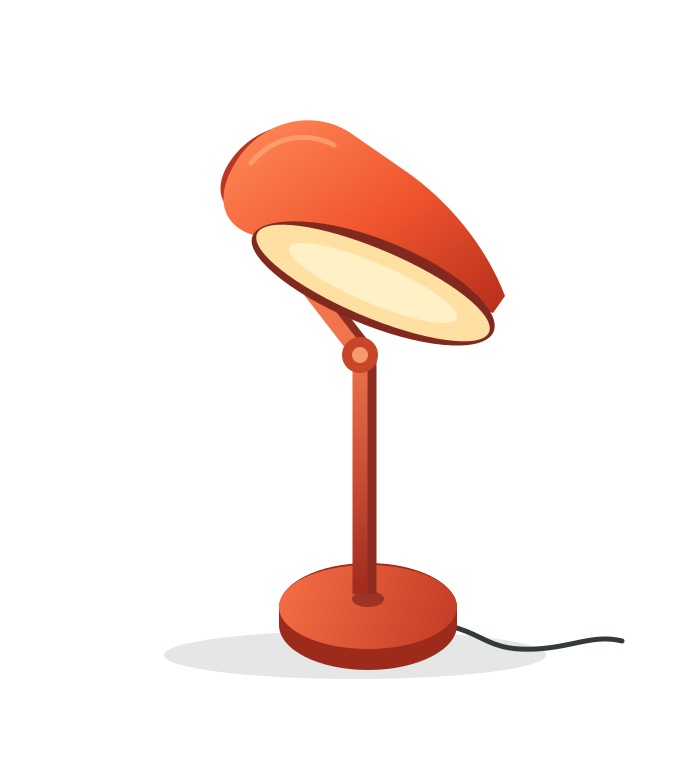
Start with the silhouette. A generous shade leans forward, held by a thin, angled stem. A low circular base anchors the composition. It feels almost like a figure bending over a book: attentive, a little curious, ready to stay a while.
The broad shade is the most visible part, but the base deserves equal attention. One directs the light; the other holds its position. The object is a small negotiation between reach and steadiness.
A lamp doesn’t furnish the whole room. It gives one small part of it a purpose.
The gesture comes first.
Imagine moving the lamp a few inches closer. The base should offer somewhere to rest a hand. The stem should make its direction legible. Even before the switch is on, the form suggests how to use it.
In this drawing, orange gives the lamp a presence of its own. Against the quiet green ground, the warm metal becomes the point of attention. A familiar tool earns a moment of looking.
A place to begin.
There is a modest pleasure in choosing the light you work by. Turning on a task lamp can mark a transition: from the rest of the day to this page, this drawing, this one thing. The object stays the same. The space around it changes.
The next time you sit down to work, notice what your light reaches. Notice what it leaves in shadow. An ordinary object can make a surprisingly precise invitation.